
Summarize this article with AI
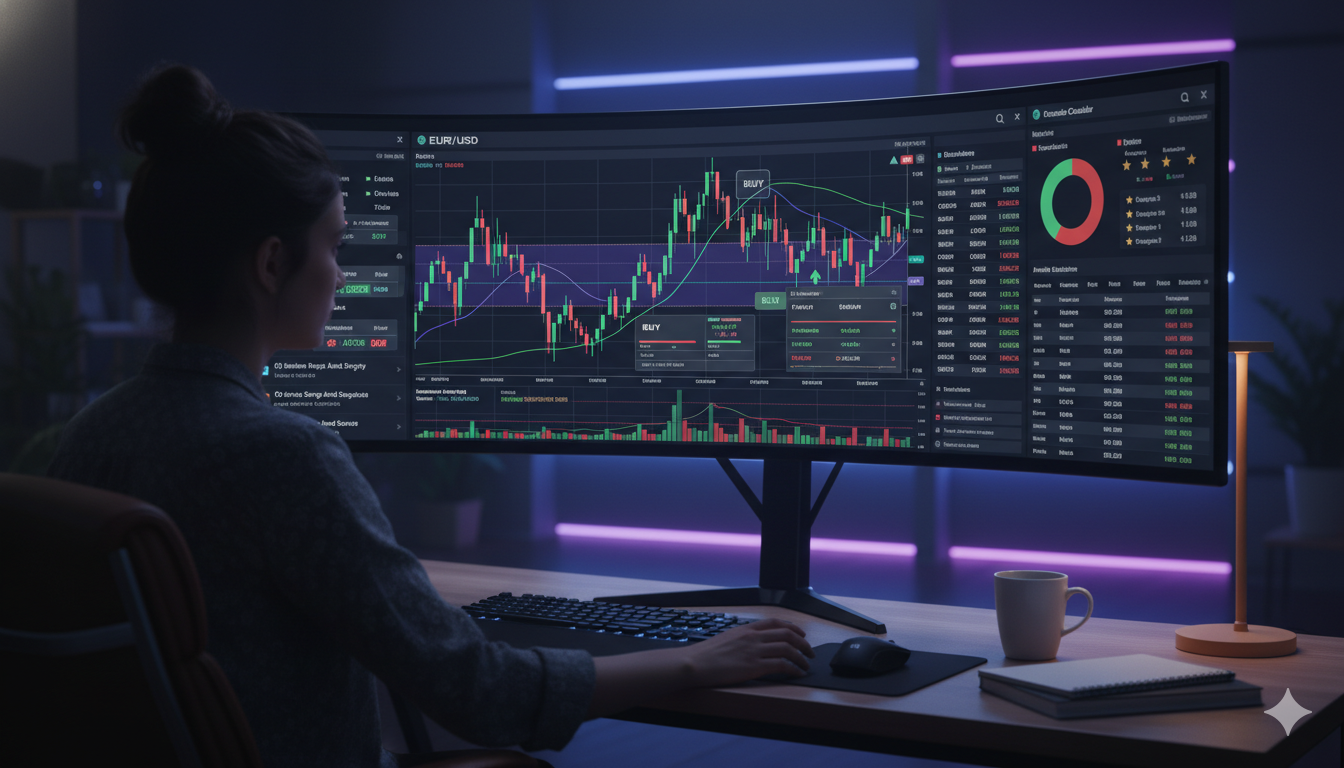
Most people don’t really understand what Forex trading is the first time they see it. You open a chart: lines and candles are moving, numbers are changing constantly, and it’s not obvious what any of it actually means. It doesn’t feel like a system yet, just something you’re trying to figure out as you go.
For beginners in UK, Forex trading often starts with that kind of uncertainty. You might know that currencies are being traded, but how that turns into an actual decision or trade isn’t always clear right away.
The idea of currency pairs is usually the first thing that needs a bit of adjustment. You’re not buying something on its own, you’re always dealing with two currencies at once, and their relationship is what creates movement. It takes a bit of time before that stops feeling confusing and starts to feel normal when you look at the chart.
Before anything else, you’ll need access to a trading platform. That part is straightforward, you sign up with a broker, log in, and you’re in. But what matters more is what you do next, and that’s usually where people slow down a bit.
Most beginners don’t jump straight into real trading, and that’s actually a good thing. Demo accounts exist for a reason, and they give you space to press buttons, open trades, and make mistakes without consequences. For traders in UK, this stage often feels simple, but it quietly builds familiarity.
Then there’s the chart itself, which becomes the centre of everything. At first, it can feel like too much is happening, especially when price keeps moving and nothing seems to stay still long enough to understand. After spending more time watching it, though, you begin to notice that movement isn’t completely random.
Eventually, you reach the point where you place your first trade. It might not feel like a big decision from the outside, but internally it can feel different, because now there’s something at stake, even if it’s a small amount. In Forex trading, this is where things start to feel real rather than theoretical.
Not long after that, you realise that entering a trade is only part of the process. What matters just as much is how much you’re willing to risk, and this is something beginners don’t always think about early on. Setting a stop loss might seem like a small step, but it changes how you approach every trade.
Once the trade is running, it doesn’t just move in one direction smoothly. Price goes up, then down, sometimes quickly, sometimes slowly, and it can make you question your decision even if nothing has really changed. This is one of those parts of Forex trading that no one fully understands until they experience it themselves.
Closing the trade brings a kind of clarity, but not always the kind people expect. Whether it ends in profit or loss, it doesn’t take long to realise that one trade doesn’t really mean much on its own. For beginners in UK, this is often where perspective starts to shift.
After that, you naturally begin to look back at what happened. Not in a formal way, just small observations, like noticing you rushed an entry or hesitated when things were clear. These moments don’t feel significant at the time, but they build awareness over time.
As all of this repeats, the process starts to feel more connected. What once felt like separate steps begins to feel like a flow, and decisions don’t feel as forced as they did in the beginning. In Forex trading, that sense of familiarity is what makes everything easier to follow.
Nothing suddenly becomes simple, and there isn’t a moment where everything clicks perfectly. But with enough time, what once felt confusing becomes something you recognise, and that alone changes how you approach the market.
