
Summarize this article with AI
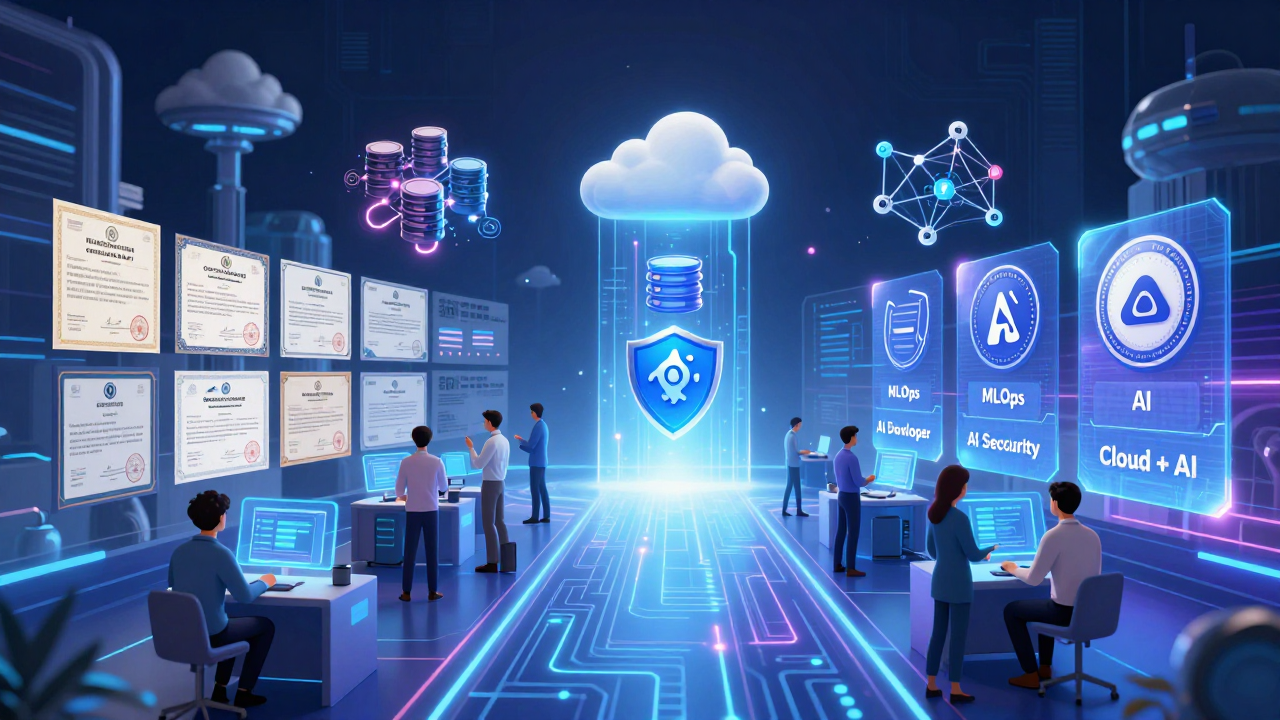
On March 6, 2026, Microsoft announced one of the most transformative updates to its certification ecosystem in years. Seven existing certifications are being retired and replaced with nine new AI-focused credentials, marking a decisive shift toward an AI-first professional landscape.
This is not a minor update or a routine refresh. It is a strategic realignment of how technical expertise is defined, validated, and measured. Microsoft is embedding artificial intelligence directly into core technical roles—spanning cloud development, cybersecurity, data engineering, SQL, MLOps, and hybrid infrastructure. The message is clear: AI is no longer a niche specialization. It is a foundational skill expected across all technology domains.
In this article, we break down everything you need to know about Microsoft’s next-generation AI certifications. From what is retiring and what is new, to how these changes affect your career decisions, this comprehensive Q&A guide addresses the most important questions professionals are asking right now.
The Big Shift: From Cloud-Centric to AI-Integrated Roles
For years, Microsoft certifications were structured around core cloud services and role-based expertise. Professionals could specialize in areas like Azure development, security, or data engineering without deeply engaging with AI.
That model is now evolving.
Microsoft’s updated roadmap reflects a new reality where AI is embedded into every layer of technology. Whether you are building applications, managing infrastructure, analyzing data, or securing systems, AI is part of the workflow.
This transition signals a broader industry trend: understanding the cloud is no longer sufficient. Professionals must now understand how AI enhances, automates, and transforms cloud-based solutions.
Which Microsoft Certifications Are Retiring in 2026?
Between June and September 2026, Microsoft will retire seven widely recognized certifications:
- Azure Data Scientist Associate (DP-100)
- Azure AI Fundamentals (AI-900)
- Azure AI Engineer Associate (AI-102)
- Azure Developer Associate (AZ-204)
- Azure Security Engineer Associate (AZ-500)
- Windows Server Hybrid Administrator (AZ-800 and AZ-801)
Each of these certifications is being replaced by a more advanced, AI-integrated alternative. Notably, AZ-800 and AZ-801 are being consolidated into a single certification, AZ-802, simplifying the hybrid administration path.
It is important to clarify that retirement applies to exams, not the certifications already earned. If you hold any of these credentials, they remain valid until their expiration date. However, once an exam is retired, it can no longer be taken or renewed.
What Are the New Microsoft AI Certifications?
Microsoft is launching 9 AI-focused certifications, designed around real-world AI integration.
1. AI-300 – MLOps Engineer Associate
- Focus: Deploying & managing ML models in production
- Ideal for: ML Engineers, MLOps professionals
- Launch: May 2026
2. DP-750 – Azure Databricks Data Engineer
- Focus: Data pipelines for AI systems
- Ideal for: Data Engineers & Architects
- Launch: May 2026
3. DP-800 – SQL AI Developer
- Focus: AI-powered database applications
- Ideal for: Backend & database developers
- Launch: May 2026
4. AI-901 – Azure AI Fundamentals (New)
- Focus: Building AI apps & agents (not just concepts)
- Ideal for: Beginners
- Launch: June 2026
5. AI-103 – AI App & Agent Developer
- Focus: Multi-agent AI systems
- Ideal for: AI Developers, Software Engineers
- Launch: June 2026
6. SC-730 – Cybersecurity Business Professional
- Focus: AI-aware security decision-making
- Ideal for: Managers & business leaders
- Launch: July 2026
7. AI-200 – Azure AI Cloud Developer
- Focus: AI apps on cloud infrastructure
- Ideal for: Full-stack & cloud developers
- Launch: July 2026
8. SC-500 – Cloud & AI Security Engineer
- Focus: Securing AI systems
- Ideal for: Security engineers & architects
- Launch: July 2026
9. AZ-802 – Windows Server Hybrid Administrator
- Focus: Hybrid infrastructure (merged cert)
- Launch: August 2026
Why Is Microsoft Moving to AI-Focused Certifications?
The shift toward AI-integrated certifications is driven by both technological evolution and market demand. According to global workforce trends, AI and data-related skills are among the fastest-growing competencies in 2026.
AI is no longer confined to specialized teams. It is becoming a horizontal capability that enhances every role:
- Developers use AI to build smarter applications
- Data engineers rely on AI-driven pipelines and analytics
- Security professionals must protect AI systems and models
- Business leaders make decisions based on AI insights
Microsoft’s certification strategy reflects this reality. By embedding AI into every certification track, the company ensures that its credentials remain relevant to employers and aligned with real-world job requirements.
This approach follows a familiar pattern. Microsoft has consistently evolved its products by layering AI onto existing platforms. The transformation from Office to Microsoft 365, and now to AI-powered productivity tools, illustrates the same philosophy now being applied to certifications.
Q&A: Addressing the Most Common Concerns
Should you still take a retiring certification exam?
The answer depends on your current progress.
If you are close to completing your preparation, it makes sense to finish and take the exam before its retirement date. If you are just beginning, it is more practical to shift your focus to the new certifications. For those midway through preparation, the decision should be based on timing and the availability of replacement training materials.
In the case of AI-900, it remains a valuable option because it is a fundamentals certification with lifetime validity.
What happens to certifications you have already earned?
Your certifications remain valid until their expiration date. Retirement does not invalidate them.
You can renew eligible certifications before the retirement date to extend their validity. However, once an exam is retired, renewal is no longer possible. Fundamentals certifications, such as AI-900, are exempt from renewal requirements and remain valid indefinitely.
Do you need to upgrade from AI-900 to AI-901?
Upgrading is optional.
AI-900 focuses on understanding AI concepts, while AI-901 emphasizes building AI applications and working with modern tools. If your goal is to transition into hands-on AI roles, AI-901 is a logical next step. Otherwise, AI-900 remains a valid and recognized credential.
What should you do if you have not registered for an exam yet?
If you have not registered and are still early in your preparation, the recommended approach is to switch to the new certification path. The updated certifications are more aligned with future job requirements and offer greater long-term value.
When does exam registration close?
Registration for retiring exams closes on the same day the exam is retired. While it is technically possible to register on the final day, availability is not guaranteed. Scheduling at least a week in advance is a safer approach.
Do retiring certifications still hold value?
Yes, they do.
Many organizations continue to recognize and value older certifications, especially when they reflect practical, role-based expertise. In many cases, the skills associated with these certifications remain relevant even after the exams are retired.
When Will the New Certifications Be Available?
The rollout of the new certifications is scheduled between May and August 2026. Early certifications such as AI-300, DP-750, and DP-800 will be available first, with others following in subsequent months.
Microsoft has already released official study materials for some of these certifications, with more expected to become available as the release timeline progresses. Beta exams are also being introduced for early adopters, although availability may vary by region.
What This Means for Your Career
This certification overhaul is more than a structural update. It represents a shift in how technical professionals are evaluated in the job market.
Employers are no longer looking for isolated skill sets. They are looking for professionals who can integrate AI into their domain of expertise. Whether you are a developer, engineer, or analyst, your ability to work with AI will increasingly define your career trajectory.
For those who already hold Microsoft certifications, this transition is not a setback. It is an opportunity to build on an existing foundation and expand into AI-driven roles. The new certifications are designed to extend your current knowledge, not replace it.
Conclusion
Microsoft’s next-generation AI certifications mark a pivotal moment in the evolution of professional credentials. By embedding AI into every certification path, the company is aligning its ecosystem with the realities of modern technology.
The shift may seem overwhelming at first, but it reflects a broader transformation that is already underway across the industry. AI is becoming a core competency, and certifications must evolve to reflect that change.
For professionals, the path forward is clear. Adaptation is no longer optional. The sooner you align your skills with AI-driven roles, the stronger your position will be in an increasingly competitive job market.
Microsoft’s new certification roadmap does not just validate your knowledge. It ensures that your expertise remains relevant in a world where AI is shaping the future of every technology domain.
