
Summarize this article with AI
My first “trial by fire” in industrial procurement vividly comes to mind. I was engaged in a major infrastructure hub project in Maharashtra, large, custom-built pump housings that were to hold up under very high pressures. As a young person and perhaps a bit overly concentrated on the financial aspect, I initially selected a vendor who offered a “streamlined” process at a price that seemed too good to be true.
At first glance, it looked fine. Yet down the line – half a year on – pressure checks exposed what everyone dreaded: faint cracks showing up like beads, hidden flaws where liquid iron failed to stick. Not merely late. A full collapse. All of it got scrapped without choice. It hit me then. An older worker pulled me close, mopped his brow, then spoke: “Listen. Metal isn’t what you pay for – what matters is how it gets shaped.”
The wisdom of that moment was etched in my mind. If you are sourcing for heavy-duty components, the robust, “bones” pieces for mining, rail, or energy industries, you are not simply looking for a foundry. You are in search of a partner who understands the mixing of sand and fire. In the present world situation, more and more leaders are realizing that Sand Casting Manufacturers India combine heritage, technical skill, and size in a way that is difficult to match elsewhere.
Frankly, locating the right partner is like finding a needle in a vast, highly competitive haystack. However, if you succeed, your supply chain’s game will change completely. Let us see why India is emerging as the global hub for this and how you can avoid making costly mistakes as I did.
1. Why Sand Casting? The “Old Reliable” of Heavy Industry
First of all, let’s address the technology aspect before the geographical one as the technology keeps sand casting as a king for heavy-duty components bearer. Even with the rapid spread of 3D printing and high-tech machining, it is still generally agreed upon that sand casting is the best solution for heavy-duty components as it is the only option that provides both flexibility and large-scale production.
The Beauty of the Mold
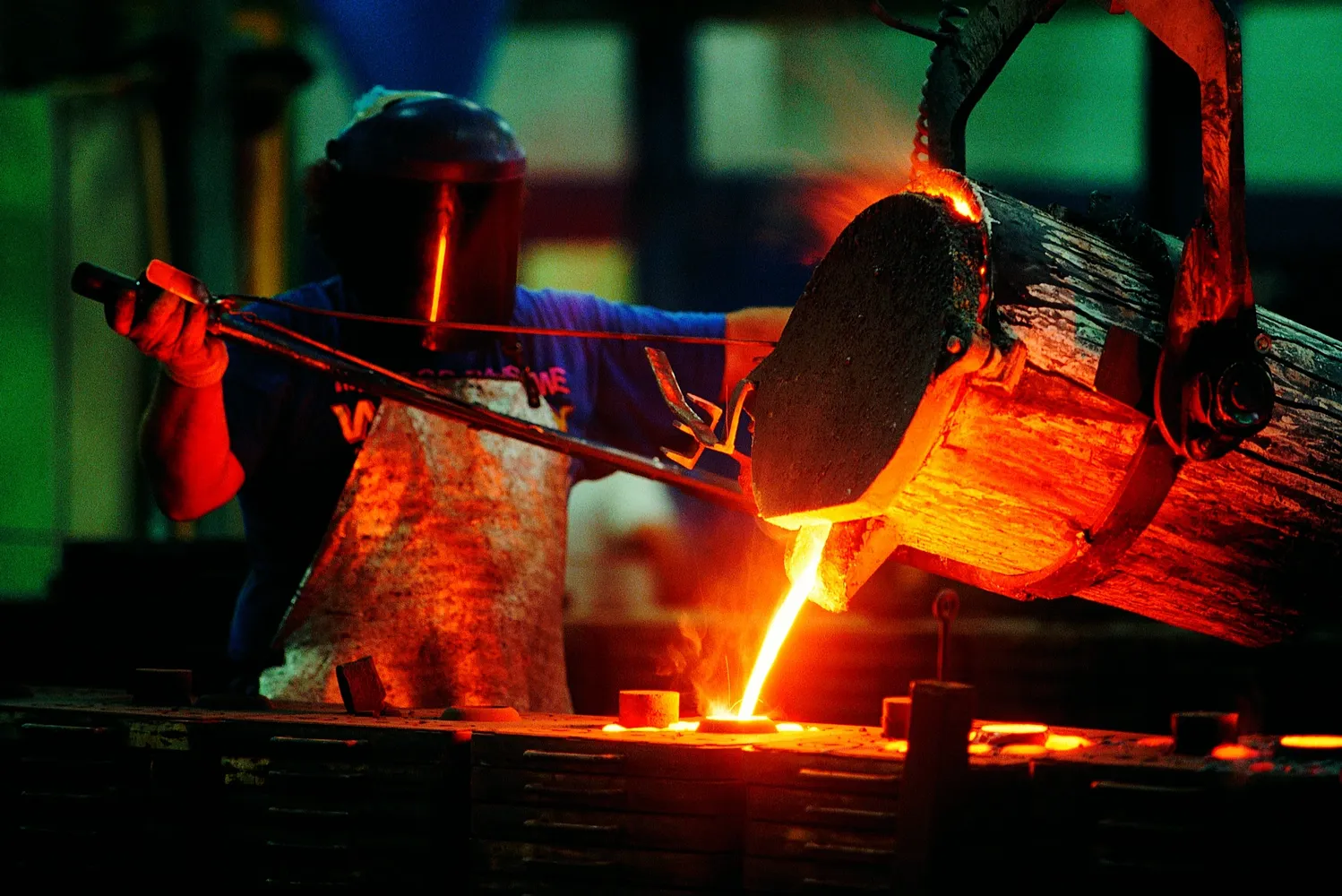
Sand casting is basically the art of carving out a container-shaped space in a special type of sand mixture and then filling it with liquid metal. Simple, right? As a matter of fact, it is both a simple and a complex process. Its simplicity is what makes it a cheap option for the production of large parts, although the “craft” of the sand chemistry lies in figuring out the right proportions of moisture, clay, and binders that will help the whole mold hold up against the several tons of molten iron.
Material Versatility
Sand casting is of course capable of handling the following types of heavy-duty materials:
- Ductile Iron: Ideal for components that need to withstand some level of deformation without breaking.
- Grey Iron: Perfect for usage in machinery where vibrations need to be controlled.
- Steel Alloys: When maximum strength is a must.
In fact, the structural soundness that a well-done sand cast offers should not be underestimated especially if you are planning to produce something that is expected to operate in harsh environments for many years.
2. The India Advantage: More Than Just Labor Costs
Some folks still believe companies pick India just because workers cost less. Truth is, that mindset belongs in the past. Looking up sand casting manufacturers there today means chasing solid work, steady delivery, trustworthy results – on top of balanced pricing. Not simply low wages.
Deeply rooted eco system
The foundry sector in India has a long history. One can witness “intergenerational knowledge” in various cities such as Pune and Chennai for the automotive industry and Rajkot and Coimbatore for heavy industries. The engineers here have been working with these particular sands and alloys for many years. Something that one cannot simply “download” into a newly built factory anywhere else in the world.
Modernization Meets Tradition
The aspect which intrigues me the most these days is how these manufactures are catching up. They very cleverly combine their traditional knowledge with modern technology and that includes:
- Simulation Software: They are able to predict the metal’s flow with the help of AI as well as thermal modeling even before the actual metal is poured.
- Automated Sand Plants: They help ensure the consistency of the “mix” time after time and thus avoid the “sweating” problems as mentioned above.
- NABL-Accredited Labs: Testing the metal’s purity here is no less stringent than the one in high-end tech lab.
3. Navigating the “Sourcing Jungle”: Step-by-Step
Making a decision about the best manufacturer in India is more like running a marathon, you have to check yourself, pace, and all those other things. Simply looking at someone’s brochure and thinking it’s a done deal is out of the question.
Step 1: The ‘Non-Negotiables’, It’s All About the Specs
Defining your technical needs in detail is the very first step. You need to specify the:
- Quality of materials: original ingots or “less desirable” scrap?
- Realistic allowances (making use of excess post-machining).
- Production capacity and furnace constraints.
Certifications Prove What Works
In India, such credentials mean far beyond a mere document
- A single step taken – meeting ISO 9001:2015 means having a working way to check how well things are done. One proof among many – it reflects effort put into keeping consistency.
- PED shows up when gear handles oil, gas, or steam under pressure. It applies to parts working hard in those conditions.
- When businesses aim beyond borders, quality proof like ISI tags matters most. Not every label fits all nations though – some stand out more abroad. A stamp of approval can open doors where trust runs deep. What works at home might need a stronger twin overseas. Global reach often leans on known symbols of care. Trusted marks travel well when customers value safety first.
- A lab inside the facility approved by NABL gives me confidence – results feel more reliable. What matters is knowing tests aren’t just done, but checked right.
4. The Hidden Costs of “Cheap” Castings
I have watched it happen many times. A procurement head receives a price 20% lower than the average and believes they have hit the jackpot. Unfortunately, they don’t realize that “cheap” in the context of heavy-duty components is the costliest blunder they can make.
Often, it is the use of products of second-rate quality such as cheap sand binders that result in sand inclusions which are bits of sand stuck inside your metal piece. These inclusions will ruin your machining tools. Ditching the heat treatment is akin to omitting the stress-relieving of parts in a furnace. The consequence may well be warpage or cracks appearing within six months. Porosity is the silent assassin air bubble-infested interiors of seemingly okay parts. They eventually crack under heavy stress without warning.
Make sure that when you request quotes, you make it a condition that every supplier follows the relevant international standards. If one quote is significantly lower, it is most likely a red flag. Same raw materials must be the basis of all the quotes, correct? The process is the only place left to cut the costs so drastically.
5. Technology and Speed: The New Frontier
At this point in time, speed has turned into an extremely powerful force behind many successful businesses. In the remote past, one had to be content with months of waiting for a pattern to be realized so that a prototype molding could take place. However, the Sand Casting Manufacturers India are rapidly employing the means of technology to drastically reduce such delays.
Digital Transformation in the Foundry
A supplier from Gujarat recently confessed to me to utilizing 3D printing for the creation of sand molds intended for prototyping. Amazing stuff. One can gain weeks in saved time since wood pattern making is dispensable as the mold can just be “printed” straight from the CAD.
- Fast changes: changes can be made in hours or days rather than months.
- Complex parts: structures with internal cooling channels which were impossible to cast can now be made.
Speed here does not mean rushing but merely means being constantly on the mark and moving with determination.
6. Building a Partnership, Not Just a Transaction
Getting a heavy-duty component is much more than just a quick sale, it is something that you rely on for years, maybe even decades. You will need a partner who will stand by you when things go wrong.
The Value of After-Sales Support
It’s the great suppliers who won’t only point at the contract when minor deviations emerge. Rather, they’ll even show your team the ropes so that they can carry on with the job or even send their team over to help with the layout.
Don’t forget to ask for clear and honest rules on warranties. A “lifetime guarantee” will be worthless if getting the claim is a long difficult process. The ideal manufacturer is one that will treat you as a partner and thus make the investment into their product so that you can make the investment into your future project.
7. The Global Shift: Why Now?
Much has been talked about “China Plus One” and diversification of supply chains. But it is not just about geopolitics. The fact that India is ramping up its infrastructure very significantly its rail system, development of smart cities, and a target to produce 500 GW from clean sources like solar and wind, is leading to a massive internal demand.
This internal demand has propelled the Sand Casting Manufacturers India to have to upgrade their product and be at the highest level. Today, they are not simply manufacturing parts for export, but also for the very most challenging projects happening right here in their own local market. Whether it is through specialized DC lines for solar setups or high strength components for the Vande Bharat trains, the quality standards definitely have to be met.
8. Final Thoughts: Trust Your Gut, But Verify Everything
Here’s the bottom line, my ultimate piece of advice, if I may:
The Indian market is quite a mix, it has some of the world’s most advanced manufacturers, but it also has a very large unorganized sector that does not hesitate to cut every corner. Your role is to single-mindedly stick to the readily verifiable standards and the well-documented histories of success.
- Begin with certifications (ISO and PED are the minimum requirements).
- Confirm the materials (request the stained steel reports for every melt).
- Do a thorough check of the process (inquire about their sand reclamation and testing).
Do not let a mere small price difference lure you into compromising on the very fundamentals of your equipment. The little money you save upfront is going to be subsequently recovered ten times fold through the increased repair bills and safety risks.
It may sound rather melodramatic, I know, but the metal you decide on today is going to determine the success of your venture. I have witnessed metal “sweating”; I have also seen the six-week delays. Believe me, you want to do it properly the very first time.
Would you like me to prepare a personalized “Foundry Audit Checklist, ” which you could send to potential manufacturers so that you are able to compare their technical capabilities more effectively?
